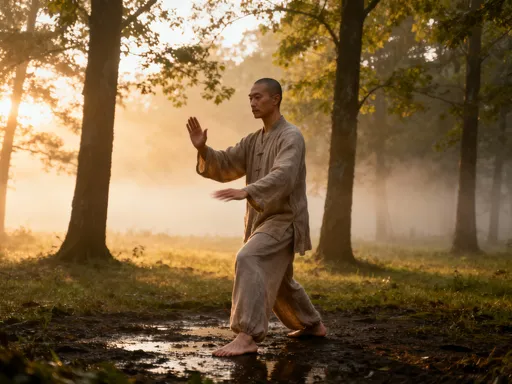
How Qigong Quietly Changed My Recovery Journey
After months of feeling stuck in my recovery from chronic fatigue, I stumbled upon qigong—almost by accident. Skeptical at first, I gave it a try, not expecting much. But within weeks, my energy levels shifted, my sleep deepened, and my mind felt clearer. This isn’t a miracle cure; it’s a practice. Grounded in traditional Chinese medicine, qigong offers gentle, effective support for rehabilitation. If your body’s been through stress, injury, or long-term illness, this might be what you’ve been missing.
The Hidden Struggle: When Recovery Feels Out of Reach
Recovery from chronic illness, surgery, or prolonged stress is rarely a straight path. Many women between the ages of 30 and 55 find themselves navigating a quiet but persistent battle—waking up tired despite full nights of sleep, struggling to keep up with household routines, or feeling emotionally drained without a clear reason. The frustration often builds slowly. You follow medical advice, rest when you can, eat well, and yet progress feels frustratingly slow. This sense of being stuck is more common than many realize, especially among caregivers and working mothers who prioritize others’ needs over their own.
Conventional rehabilitation often focuses on physical therapy, medication, or lifestyle adjustments like diet and aerobic exercise. While these are essential, they sometimes overlook a critical piece: the connection between the mind and body. Emotional stress, unresolved tension, and disrupted breathing patterns can subtly hinder healing, even when outward symptoms appear to be improving. The body may be ready to recover, but if the nervous system remains in a state of low-grade alert—constantly braced for the next demand—it cannot fully engage in repair and restoration.
This is where holistic practices begin to fill the gap. The idea is not to replace medical treatment but to support it with methods that encourage the body’s innate ability to heal. Qigong, a centuries-old practice from traditional Chinese medicine, operates precisely on this principle. It does not demand strength or speed. Instead, it invites stillness, awareness, and gentle movement—qualities often missing in modern recovery routines. For those whose bodies have endured long-term strain, qigong offers a way to reestablish balance without added effort or strain.
What makes qigong especially relevant for this stage of life is its adaptability. Whether recovering from a serious illness, managing the aftermath of surgery, or simply trying to regain vitality after years of burnout, the practice meets you where you are. It does not ask you to push harder. It asks you to slow down, to listen, and to allow healing to unfold at its own pace. In a culture that often equates progress with intensity, this quiet approach can feel radical—and deeply restorative.
What Exactly Is Qigong? Breaking Down the Basics
At its core, qigong (pronounced “chee-gong”) is a mind-body practice that combines slow, intentional movements, controlled breathing, and focused attention. The word itself comes from two Chinese terms: *qi*, meaning vital energy or life force, and *gong*, meaning cultivation or practice. Together, qigong translates to “cultivating energy.” This does not refer to anything mystical, but rather to the body’s natural physiological rhythms—how breath, circulation, muscle tension, and mental state influence one another.
Unlike high-impact workouts or strenuous fitness routines, qigong emphasizes gentleness and awareness. Movements are fluid, often circular, and repeated in a flowing sequence. A typical session might involve standing with feet shoulder-width apart, gently shifting weight from one leg to the other, raising the arms slowly as if cradling a ball, or rotating the wrists and ankles with mindful attention. Each motion is coordinated with the breath—inhaling as the arms rise, exhaling as they lower—creating a rhythm that calms the nervous system.
Breath is a central component. In qigong, breathing is deepened and slowed, often using diaphragmatic or abdominal breathing. This type of breathing activates the parasympathetic nervous system, which is responsible for rest, digestion, and recovery. When practiced regularly, this breathing pattern can counteract the shallow, rapid breaths associated with stress and fatigue—patterns many women fall into without realizing it.
The third element is intention. In qigong, every movement is done with quiet focus, often with the mental image of guiding energy through the body. This is not about visualizing light or supernatural forces, but about cultivating presence—being fully in the moment, aware of how the body feels, how the breath moves, and how the mind responds. This meditative quality is what distinguishes qigong from simple stretching or light exercise. It is a practice of integration, bringing together physical motion, breath, and mental focus to support overall well-being.
Because of its low intensity, qigong is accessible to nearly everyone, regardless of age, fitness level, or physical limitation. It can be practiced standing, seated, or even lying down. No special equipment is needed. A quiet space, comfortable clothing, and a few minutes of time are all that’s required. For women managing busy households or recovering from illness, this simplicity is part of its appeal. It fits into life rather than demanding a complete overhaul of routine.
Why It Works: The Science Behind the Stillness
While qigong has roots in ancient tradition, modern science is beginning to validate its benefits. Research conducted at institutions such as Harvard Medical School and the National Institutes of Health has explored how mind-body practices influence physiological markers of health. Studies on qigong specifically have shown measurable improvements in stress regulation, immune function, and pain management. These findings help explain why so many people report feeling better—not just emotionally, but physically—after incorporating qigong into their recovery routines.
One of the most well-documented effects is its impact on the nervous system. Chronic stress keeps the body in a state of sympathetic dominance—often called the “fight-or-flight” response. This state increases heart rate, elevates blood pressure, and suppresses non-essential functions like digestion and tissue repair. Qigong, through its emphasis on slow movement and deep breathing, activates the parasympathetic nervous system, which promotes relaxation and healing. A 2013 meta-analysis published in the Journal of Evidence-Based Complementary & Alternative Medicine found that regular qigong practice significantly reduced cortisol levels, the primary stress hormone, in participants across multiple studies.
Another area of benefit is inflammation. Chronic low-grade inflammation is linked to a wide range of conditions, including fatigue, joint pain, and cardiovascular issues. Research from the University of California, Davis, demonstrated that individuals who practiced qigong for eight weeks showed reduced levels of inflammatory markers such as C-reactive protein. While qigong is not a treatment for disease, these changes suggest it supports the body’s natural anti-inflammatory processes.
Improved circulation is another key outcome. The gentle, wave-like motions of qigong encourage blood flow, particularly to the extremities and deep tissues. This can be especially helpful for those recovering from surgery or prolonged inactivity, where poor circulation may contribute to stiffness, swelling, or delayed healing. Additionally, the rhythmic nature of the practice enhances lymphatic drainage, which plays a vital role in immune function and detoxification.
Sleep quality is another area where qigong shows consistent benefit. A 2020 study in Menopause journal found that postmenopausal women who practiced qigong three times a week reported significant improvements in sleep duration and quality, as well as reductions in nighttime awakenings. Given that disrupted sleep is a common complaint among women in midlife—often linked to hormonal changes, stress, or chronic pain—this is a meaningful finding. Better sleep, in turn, supports every aspect of recovery, from cognitive function to emotional resilience.
It is important to emphasize that qigong is not a substitute for medical care. It does not claim to cure disease or replace prescribed treatments. Instead, it functions as a supportive therapy—one that enhances the body’s readiness to heal. The science does not promise miracles, but it does confirm what practitioners have long observed: that gentle, consistent practice can lead to real, measurable improvements in well-being.
Real Shifts: How Qigong Supports Rehabilitation
The true value of qigong becomes clear when you look at how it affects daily life. Women who have incorporated it into their recovery routines often describe subtle but meaningful changes: waking up feeling more rested, moving with less stiffness, or noticing a greater sense of calm during stressful moments. These shifts may seem small in isolation, but over time, they add up to a profound difference in quality of life.
One of the most common benefits is improved joint mobility. After surgery or long periods of inactivity, joints can become stiff and painful. Traditional physical therapy is essential, but qigong offers a complementary approach. Its gentle rotations, weight shifts, and flowing movements help lubricate the joints, improve range of motion, and reduce muscle tension without strain. Many women recovering from hip or knee surgery, for example, find that qigong helps them regain confidence in their movements, reducing fear of pain or re-injury.
Chronic pain is another area where qigong shows promise. While it does not eliminate pain, it changes the relationship to it. By cultivating body awareness and breath control, practitioners learn to respond to discomfort with greater calm rather than tension. This shift can break the cycle of pain-tension-pain that often worsens chronic conditions. A study published in Pain Medicine found that patients with fibromyalgia who practiced qigong reported reduced pain intensity and improved function compared to control groups. The practice did not cure the condition, but it gave participants more tools to manage their symptoms.
Emotional resilience is another significant benefit. Recovery is not just physical—it is deeply emotional. Feelings of frustration, anxiety, or grief are common when the body is healing slowly. Qigong provides a space to process these emotions without judgment. The rhythmic movements and breath work create a sense of safety and grounding, helping to regulate mood and reduce anxiety. Women who have experienced burnout or long-term illness often describe qigong as a way to “reconnect” with their bodies in a positive, nurturing way—something that can be lost when illness dominates daily life.
Improved sleep, as noted earlier, is another consistent outcome. But beyond quantity, many report better sleep quality—fewer nighttime awakenings, less mental chatter before bed, and a deeper sense of rest. This is not surprising, given that qigong helps regulate the nervous system and reduce stress hormones. For women juggling caregiving, work, and personal health challenges, better sleep can be transformative.
Perhaps most importantly, qigong fosters a sense of agency. In a medical system where patients often feel passive—waiting for appointments, test results, or prescriptions—qigong offers a way to actively participate in healing. It is something you do for yourself, every day, that supports your body’s natural wisdom. This sense of empowerment can be just as healing as any physical change.
Getting Started: Simple Practices for Everyday Healing
One of the greatest strengths of qigong is its accessibility. You do not need prior experience, special equipment, or hours of free time. Even five to ten minutes a day can make a difference. The key is consistency, not duration. For women managing busy households or recovering from illness, this flexibility is essential.
Here are three beginner-friendly routines that can be done at home, at any time of day:
Morning Grounding: Begin by standing with feet shoulder-width apart, knees slightly bent, arms relaxed at your sides. Close your eyes or soften your gaze. Take three slow, deep breaths, inhaling through the nose and exhaling through the mouth. Then, begin to shift your weight gently from left to right, as if swaying in a breeze. Keep the movements small and smooth. As you sway, imagine roots growing from the soles of your feet into the earth, creating a sense of stability. Continue for 3–5 minutes. This practice helps center the mind and prepare the body for the day.
Breath-Focused Relaxation: Sit comfortably in a chair with feet flat on the floor. Place one hand on your abdomen. Inhale slowly through the nose, allowing the belly to rise. Exhale slowly through the mouth, feeling the abdomen fall. Repeat for 5–7 breaths. Then, as you inhale, imagine the breath moving up the spine; as you exhale, imagine tension melting down through the body and out the feet. This exercise can be done during breaks, before bed, or whenever stress arises. It calms the nervous system and improves oxygen flow.
Gentle Joint Mobilization: While standing or seated, begin with the wrists. Rotate them slowly in circles, first clockwise, then counterclockwise, for 10 repetitions each. Move to the ankles, then the shoulders, neck, and hips, using small, controlled motions. Keep the breath slow and steady throughout. This routine increases circulation, reduces stiffness, and enhances body awareness. It is especially helpful in the morning or after long periods of sitting.
Each of these practices can be adjusted based on energy levels. On low-energy days, shorten the time or perform movements while seated. The goal is not perfection, but presence. Over time, these small moments of attention build a foundation for deeper healing.
Building a Sustainable Routine: Consistency Over Intensity
The power of qigong lies not in intensity, but in regularity. Unlike high-effort workouts that may lead to burnout or injury, qigong thrives on gentle, daily repetition. The changes it brings are often subtle—better sleep, less tension, a calmer mind—but they accumulate over weeks and months. The challenge for many women is not learning the movements, but making them a lasting part of daily life.
One effective strategy is habit stacking—linking qigong to an existing routine. For example, practice the morning grounding exercise right after brushing your teeth, or do breath-focused relaxation while waiting for the kettle to boil. These small connections make the practice feel natural rather than burdensome. Over time, the body begins to expect and welcome these moments of stillness.
Motivation can wane, especially during periods of low energy or emotional strain. On such days, it helps to lower the bar. Instead of aiming for a 10-minute session, commit to just one minute of deep breathing or a single joint rotation. The act of showing up—even briefly—reinforces the habit. Tracking subtle changes can also boost motivation. Keeping a simple journal to note improvements in sleep, mood, or energy levels helps make progress visible, even when it feels slow.
Creating a supportive environment also matters. Choose a quiet corner of the home, perhaps near a window with natural light. A small plant, a cushion, or a calming image can make the space inviting. Some women find that playing soft instrumental music or nature sounds enhances the experience. The goal is to make the practice feel like a gift to yourself, not another task on the to-do list.
It is also important to listen to the body. Some days, energy will be higher; others, rest may be needed. Qigong is not about pushing through. It is about tuning in. Adjusting the practice to match your current state—shorter sessions, seated positions, or gentler movements—honors your body’s needs and supports long-term consistency.
When to Seek Guidance: Integrating with Professional Care
While qigong is safe for most people, it is best used as a complement to, not a replacement for, professional medical care. Women with chronic conditions, cardiovascular issues, or recent surgeries should consult their healthcare provider before beginning any new practice. This is not because qigong is risky—it is generally very low risk—but because individual health needs vary, and integration with existing treatment plans is essential.
Finding a qualified instructor can enhance safety and effectiveness. Look for teachers certified by reputable organizations such as the National Qigong Association or the International Institute of Medical Qigong. These instructors have undergone training in both the practice and its therapeutic applications. Online classes can be helpful, but ensure they come from credible sources with clear credentials.
It is also important to be cautious of misinformation in the wellness space. Some sources make exaggerated claims about qigong’s ability to cure diseases or replace medical treatments. These claims are not supported by science and can be harmful. Qigong is a supportive practice, not a cure-all. Its value lies in its ability to enhance well-being, reduce stress, and support the body’s natural healing capacity—nothing more, nothing less.
For women navigating recovery, the journey is deeply personal. What works for one may not work for another. The beauty of qigong is that it does not demand belief or dramatic change. It simply offers a quiet, accessible way to reconnect with the body, breathe more fully, and create space for healing to unfold. When combined with professional care, it becomes a powerful ally in the journey toward wholeness.
Qigong won’t replace medicine, but it deepens the body’s capacity to heal. Its true value lies in consistency, patience, and presence. For anyone navigating recovery, it offers a gentle, empowering tool—one breath, one movement at a time.